Data study · Greyhounds
Greyhound trap bias: what the BSP data says about draw advantage
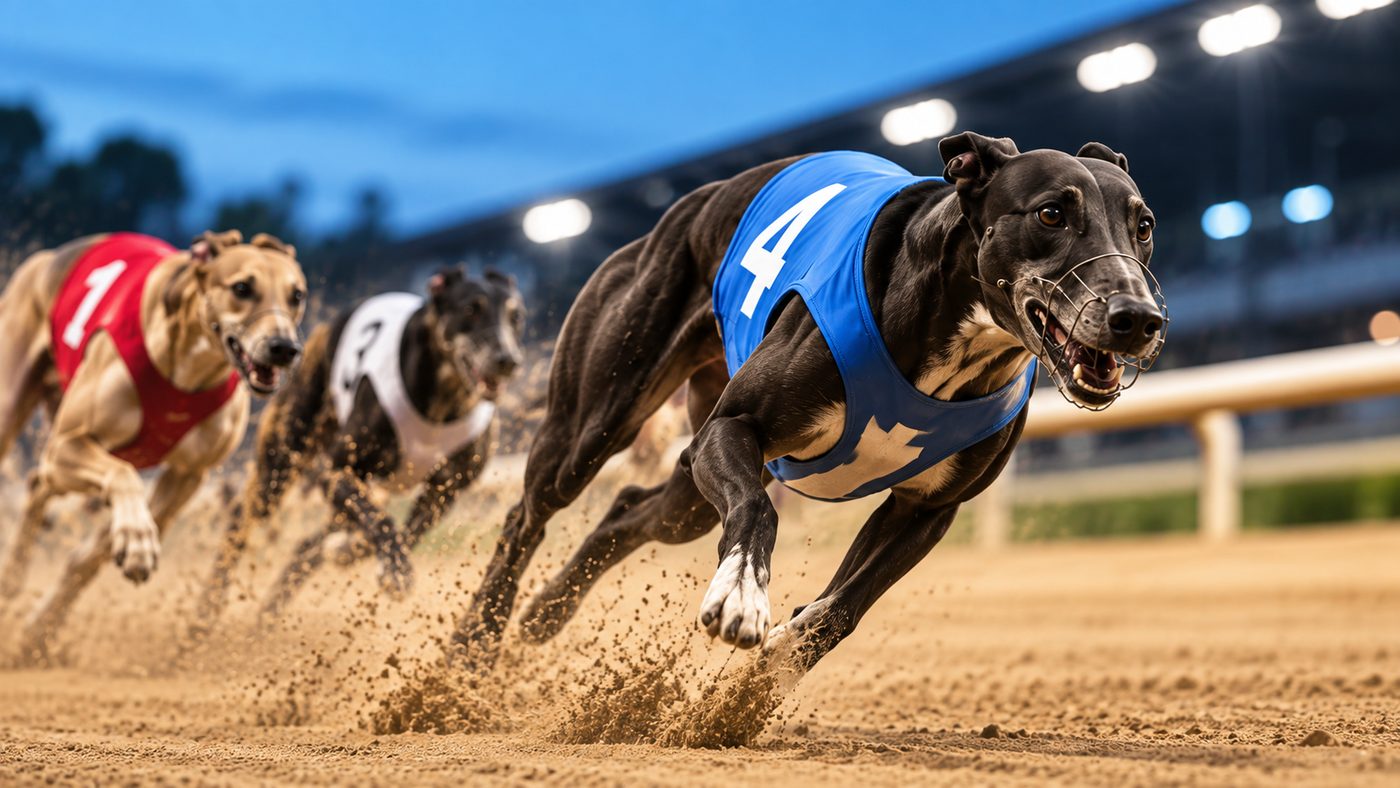
Trap bias is the most talked-about edge in greyhound racing and the most lazily applied. "Trap 1 always wins" is not a strategy. Here is how draw advantage actually behaves across a large Betfair BSP sample — and how to check it for the tracks you bet.
On the figures below: the numbers in the tables are illustrative, to show the shape of the effect and how to read it. Run the exact query for your date range and tracks in the System Builder before you bet or publish anything off the back of them.
What "trap bias" actually means
Greyhounds are drawn in traps 1–6, numbered from the inside rail outwards. UK tracks run anti-clockwise, so:
- Low traps (1–2) start nearest the rail and have the shortest route through the bends — if they break well.
- High traps (5–6) have more room and less traffic early, which suits a fast beginner, but travel further.
- Middle traps (3–4) are the most traffic-dependent — they get squeezed both ways.
"Railers" want to be low; "wide runners" want to be high; a dog drawn against its running style is the classic bad bet the market sometimes misses.
The raw picture, all tracks combined
Pool every UK race together and the trap-by-trap pattern looks roughly like this:
| Trap | Win strike rate | Back @ BSP, ROI | Read |
|---|---|---|---|
| 1 | ~19–21% | slightly negative | Wins most, but the market knows — no value blind |
| 2 | ~17–18% | around breakeven | Least talked about of the low draws |
| 3 | ~15–16% | negative | Traffic trap |
| 4 | ~15–16% | negative | Traffic trap |
| 5 | ~16–17% | around breakeven | Better than its reputation |
| 6 | ~17–19% | slightly positive in places | Wide, clear run; sometimes under-bet |
Two things to take from this. First, the win-rate gradient is real: the draw matters. Second, and more important, the raw win rate is already in the price. Backing trap 1 in every race does not make money, because everyone has read the same "trap 1 wins most" line. The question worth money is where the market over- or under-corrects — and that is a track-by-track question.
It's a track effect, not a global one
Averaging every track together hides the actual signal. Individual tracks vary enormously with circumference, bend tightness, and whether the run to the first bend is long or short:
- Tight, short-run-to-bend tracks amplify the low-draw advantage — trap 1–2 dominance is much stronger than the all-tracks average.
- Galloping tracks with a long first straight flatten it — beginners from any trap can cross before the bend, so draw matters less and early pace matters more.
- A few tracks and specific distances genuinely favour the high traps, against the national pattern.
The practical consequence: a "trap bias system" that isn't filtered by track and distance is averaging opposite effects into mush.
Trip length changes everything
Over a sprint, the first bend is a huge share of the race and the draw is close to destiny. Over a staying trip, there is time for the race to sort itself out and running style, stamina and pace rating carry more weight than the trap number.
| Trip | Draw's influence on result | What to lean on instead |
|---|---|---|
| Sprint (< ~400m) | High | Trap + early-pace rating + track |
| Standard (~400–500m) | Moderate | Trap + running style + grade moves |
| Staying (500m+) | Low | Stamina, pace, class — trap is a tiebreaker |
How to check it properly for your tracks
- Pick one track and one distance. Never analyse "all tracks" for a draw study.
- Filter by trap and read BSP ROI, not just strike rate. Strike rate tells you what happens; ROI tells you whether the market has already paid for it.
- Check the sample. One trap at one track over one year can be a few hundred runners — treat small samples as suggestions, not findings.
- Split by year. Track surfaces and maintenance change. A bias from 2020 may not survive to 2026.
- Cross with running style. The strongest angle is usually not "trap 6" but "trap 6 and a confirmed wide runner and a fast first-sectional", at a track that rewards it.
The short version
- Draw matters, and the win-rate gradient is genuine.
- The raw gradient is already priced — blind "back trap 1" loses.
- Edges live at the track-and-distance level, where the market over- or under-adjusts.
- Sprints are draw-dominated; staying trips are not.
- Combine trap with running style and pace before you call it a system.
SportsEdgePro provides data and analysis tools for informational purposes only. Figures in this article are illustrative. Nothing here is betting advice. 18+ · begambleaware.org